This website is under development. Some features and content may not be fully available yet. Thank you for your patience and support.

When Consistency in Worship Breaks, Return to Dhikir
Umm Ayman
4/7/20263 min read
Bismillahir Rahmanir Rahim
Allah ﷻ has created us for His worship. This worship takes many forms—seeking knowledge, reciting the Qur’an, engaging in dhikr, performing salah, and serving others—all of which nurture and strengthen a Muslim’s spiritual life.
However, there are times when these acts can begin to feel heavy, leading to spiritual fatigue and diminishing motivation. In such moments, it becomes essential to reflect on the connection between the state of our hearts and the words that flow from our tongues.
The Role of tongue in Spiritual Well-being
When our tongues cease to remember Allah, our hearts may begin to weaken, impacting our ability to engage meaningfully in worship. So examine the state of your tongue. Because often, the heart begins to weaken after the tongue becomes empty of the remembrance of Allah. This is why the Prophet ﷺ gave such powerful and practical advice to a man who felt overwhelmed by the many acts of Islam.
A man once came to the Messenger of Allah ﷺ and said:
“O Messenger of Allah, the laws of Islam have become too much for me, so tell me something I can hold fast to.”
He ﷺ replied:
“Let not your tongue cease to be moist with the remembrance of Allah.”
(Sunan At-Tirmidhi, 3375)
SubhanAllah — what a powerful reminder.
Please notice carefully, the man did not ask for his obligations to be removed. Rather, he asked for something that would help him remain firm and carry out his duties with greater ease and consistency.
And the Prophet ﷺ did not direct him to something complicated.
He directed him to dhikr — the remembrance of Allah — because it is one of the greatest protections for the heart.
Why Dhikr Helps When Worship Feels Heavy
So if we want to keep ourselves spiritually motivated, merely following routines is not always enough to give us the sweetness of worship. Instead we should try to keep our hearts alive. And one of the greatest ways to keep the heart alive is frequent remembrance of Allah.
Dhikr protects the believer inwardly. It strengthens the heart, pushes back heedlessness, and helps a person remain spiritually alert. In another hadith, the Prophet ﷺ described the one who remembers Allah like a man being chased by an enemy who finds safety inside a strong fortress. Here the mentioned enemy is Shaytan —whose whispers, distractions, discouragement, and efforts make worship feel difficult.
When a person neglects dhikr, He often becomes more vulnerable to:
laziness in worship,
procrastination,
spiritual numbness,
and a feeling of distance from Allah.
But when the tongue remains alive with remembrance, the heart is guarded.
Practical Steps to Keep Your Tongue Engaged in Dhikr
The beauty of dhikr is that it does not require a perfect setting, a special schedule, or long uninterrupted time.
It can be woven into the ordinary moments of daily life.
Below are a few simple ways to keep your tongue engaged in the remembrance of Allah:
1. Make Daily Dhikr a Non-Negotiable
Set small, regular moments throughout your day for remembrance.
This does not need to be complicated.
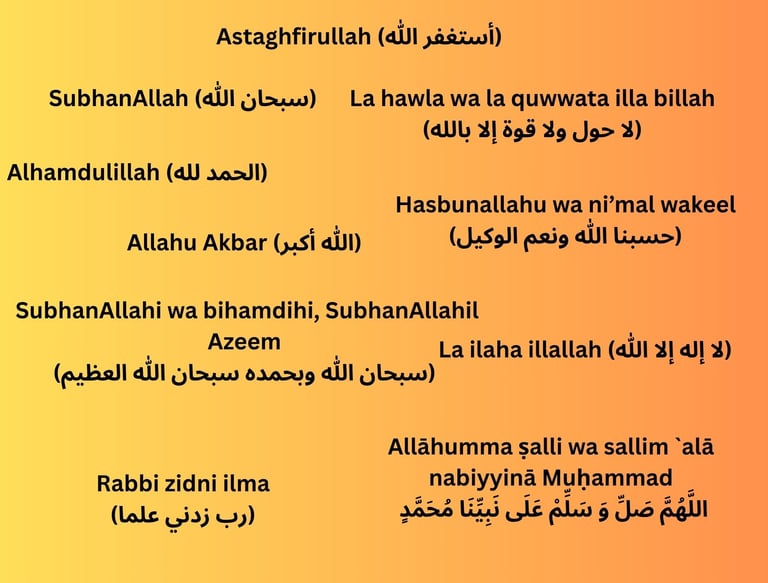
You can begin with phrases such as:
SubhanAllah
Alhamdulillah
La ilaha illa Allah
Allahu Akbar
Astaghfirullah
Repeat them while:
cooking,
driving,
folding laundry,
waiting in line,
walking,
or before sleeping.
For example:
after salah,
while cleaning,
while preparing meals,
during school pick-up,
while putting children to sleep.
This helps remembrance become a way of life, not just a separate spiritual activity.
2. Recite Qur’an Daily — Even a Little
The Qur’an is the greatest form of dhikir
Even if you can only read a few verses each day, try to stay connected to the Book of Allah consistently.
Read slowly. Reflect where you can.
Let the Qur’an soften what has become heavy.
A little recited consistently is far more beneficial than long stretches followed by complete توقف (stopping).
3. Speak Beneficial Words
Your tongue does not only engage in dhikr through tasbih. It can also be used for:
sharing reminders,
teaching children,
discussing Islamic knowledge,
encouraging good,
and speaking words that bring people closer to Allah.
A tongue occupied with beneficial speech is far safer than a tongue left open to heedlessness, complaint, gossip, or useless talk.
May Allah keep our tongues moist with His remembrance, our hearts firm upon His deen, and our homes filled with the light of Qur’an.
May Allah grant us the ability to worship Him sincerely and include us among His righteous servants.
Jazakum Allahu khairan for being here.